The strength behind off-the-road tires comes down to those steel-reinforced casings. Steel belts account for around 15% of what makes up a tire's total weight. What we're really talking about here is an internal framework that serves as kind of a backbone for the whole thing, spreading out pressure where it matters most when the tire meets the ground. Take those massive mining shovels that move hundreds of tons at once. When these machines rely on steel reinforced tires instead of regular ones, there's about 40% less flexing on the sides. This means the tires last much longer before showing signs of wear and tear. Field tests show these reinforced models keep working reliably well past 8,000 hours of operation in some cases, which is pretty impressive considering what they go through day after day.
Off-the-road (OTR) tires face brutal conditions daily, from sharp granite fragments to rough slag and corrosive chemicals. Special multi-layer compounds give these tires about 30% better protection against cuts compared to regular rubber, according to tests following ISO 6945:2023 standards. The reinforced sidewalls contain crosslinked polymers that significantly cut down on wear. Field tests show abrasion remains below 0.8 mm after running for 1,000 hours in copper mines. That's actually half what we see with normal tires, which means these specialized treads last much longer even when subjected to constant punishment from rough terrain and heavy loads.
Advanced rubber blends incorporate silica and aramid fibers to endure extreme conditions:
| Property | Standard Tire | OTR Specialty Tire | Improvement |
|---|---|---|---|
| Heat Resistance (°C) | 120 | 160 | +33% |
| Cut Growth Resistance | 100% baseline | 270% | 2.7x |
| Hydrocarbon Resistance | Low | High | Prevents swelling from oils/chemicals |
These formulations deliver superior resilience against thermal degradation, mechanical damage, and chemical exposure common in heavy industrial settings.
Vulcanization forms sulfur bonds within rubber that keep it stable even at temperatures around 150 degrees Celsius. This matters a lot because brake systems can push rim temperatures past 130C during long descents down hills with 10% gradients. The increased heat resistance cuts down on tread coming apart by roughly two thirds in underground mines, based on figures released last year by the International Mining Safety Group. Fewer tire failures means safer operations overall and less downtime caused by unexpected repairs.
Radial off-the-road tires have steel belts in their treads which gives them around 15 to maybe even 30 percent more load carrying ability compared to those old fashioned bias ply models. Plus they generate about 18 to 22 percent less heat when running non stop according to Tire Review from last year. Now bias ply tires work differently because they use these crisscrossed nylon layers. They actually handle impacts much better in rough rocky areas, giving about 40% improvement there. But there's a tradeoff since they create roughly 12 to 15% more resistance when rolling along. Solid tires take things further by getting rid of air pockets completely. These are great for material handling equipment since nothing can puncture them. A study done at a mine back in 2022 showed something interesting though. While solid tires cut down on downtime by as much as 65%, workers complained about increased vibrations, which went up about 28%. Looking at what's happening in the industry right now, nearly 6 out of every 10 construction companies prefer radial tires for their main hauling trucks.
When it comes to earthmoving equipment, radial tires can take on quite a load, supporting weights between 8,500 and 12,000 kg per tire. These beat out traditional bias-ply models which typically max out around 6,200 to 9,800 kg for loaders. Over in quarries where solid tires are common, container handlers can push them to handle up to 14,500 kg, though operators need to reinforce suspensions because these solid rubber beasts don't flex much. Looking at some recent field tests from last year, when researchers checked 47 different mining trucks under heavy duty conditions, they found that radial tires kept their pressure stable about 92% of the time even with 55 ton loads, while the old style bias-ply tires only managed around 84% stability. That makes a real difference in day to day operations where consistent performance matters most.
In copper mines, radial OTR tires last 12–15% longer than bias-ply when hauling 50-ton payloads over 10km daily routes. Operating at 350 psi, radial designs improve fuel efficiency by 8–12% in dump trucks (Mining Fleet Journal 2024). However, bias-ply tires remain preferred in secondary operations due to 23% faster field repairs after rock impacts.
While radial tires power 68% of North American primary mining haulers, 72% of aggregate producers continue using bias-ply for rock-crushing zone vehicles. The debate centers on whether the 18–22% higher cost of radials justifies their extended lifespan versus bias-ply’s proven advantage in rapid field reparability under severe impact conditions.
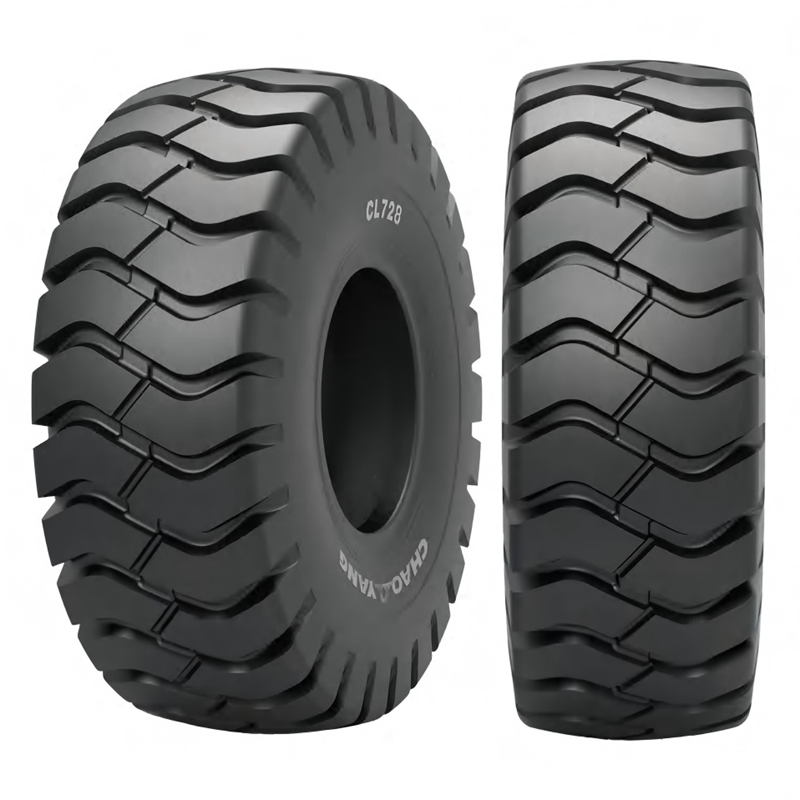
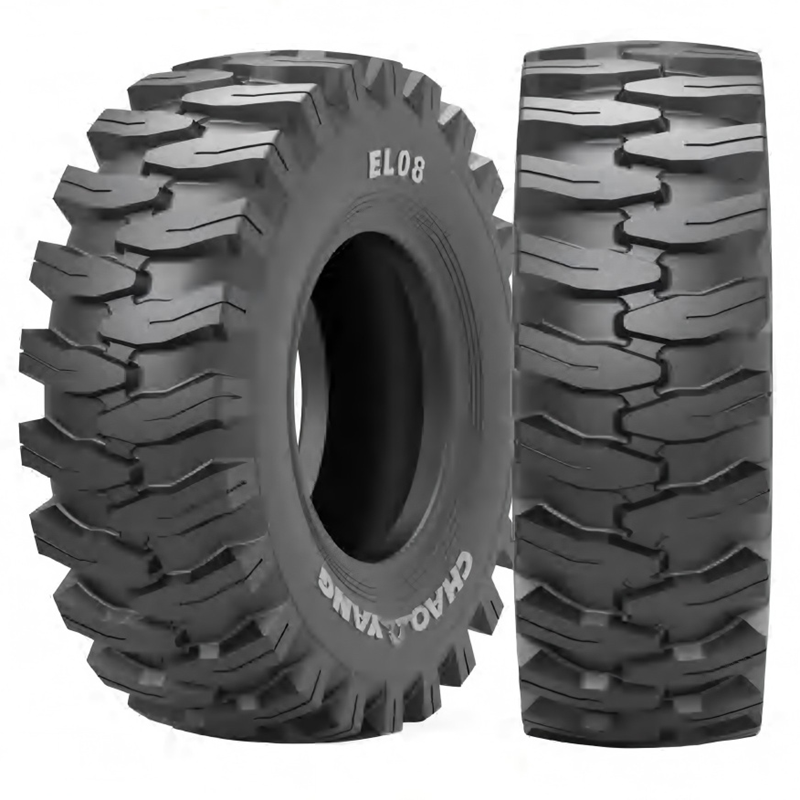
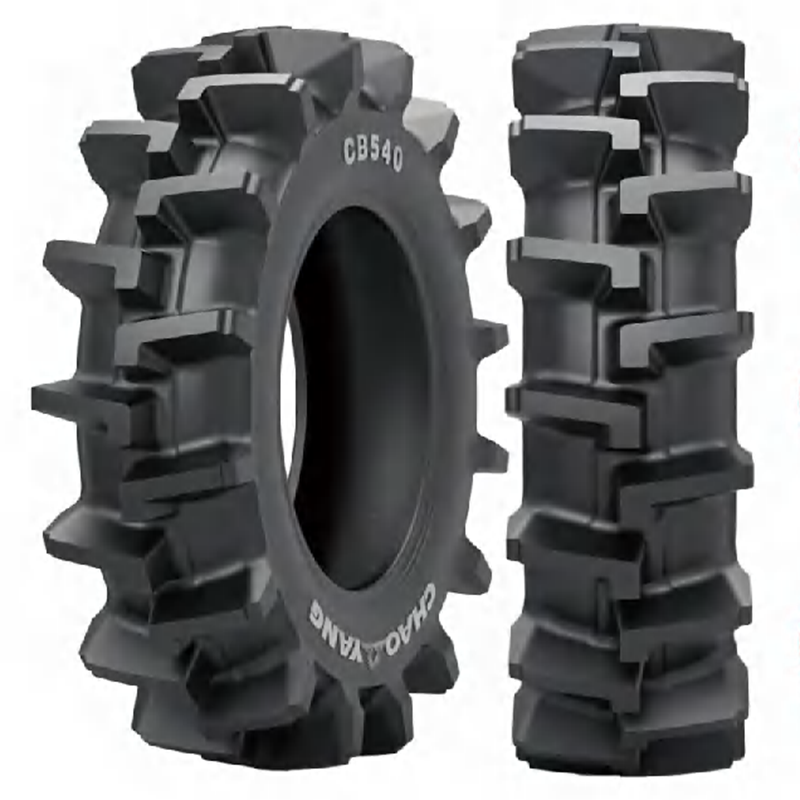
Modern OTR tires feature terrain-specific tread geometries optimized for distinct ground types. Self-cleaning lugs spaced at 3.5" prevent clay buildup in muddy conditions, while zigzag grooves deflect sharp impacts in rocky environments. These designs reduce slippage by 27% on gravel slopes compared to conventional patterns, improving both safety and productivity.
Deep treads—up to 65mm, or 17% deeper than standard—enable aggressive penetration into compacted surfaces. When combined with 45°-angled lugs, they provide strong climbing grip and efficient debris ejection during reverse motion. Field-tested configurations demonstrate a 40% reduction in stone retention, crucial for maintaining consistent traction in quarries.
At Indonesian coal mines, advanced tread designs maintained 82% traction efficiency during monsoon rains—33% higher than previous-generation tires. The staggered lug layout also reduced winching needs by 19% on slippery limestone slopes, lowering fuel use and accelerating project timelines.
OTR tires work well in all sorts of extreme conditions, surviving everything from the bone-chilling -40 degrees Fahrenheit found in Arctic mining operations right up to the blistering heat of 158 degrees in desert environments. The secret lies in special rubber formulas that stay flexible when it's freezing outside but don't melt away when temperatures climb. Take those massive haul trucks operating in Australian iron ore mines for example surface temps there regularly hit over 180 degrees Fahrenheit. Even after hours in such brutal heat, these tire compounds still hold onto about 85% of their original flexibility according to recent research from Parker Mining Tech (2023). That kind of performance makes all the difference in harsh working conditions.
When rubber sits in direct sunlight for long periods, it tends to oxidize about 40% faster than when stored in shaded areas. High quality off-the-road tires fight back against this damage through special materials like sulfur vulcanized rubber combined with UV stabilizers that stop nearly all harmful ultraviolet light between 320 and 400 nanometers. Field tests conducted over five years by Wang and colleagues demonstrated something interesting too. Their modified tire formulas cut down on UV related wear by around 40%, keeping those critical tire sidewalls intact even after sitting out in harsh conditions at open pit mining sites for over 12 thousand hours straight.
Tread and compound design are tailored to site-specific challenges:
Hybrid rubber compounds balance rigidity for granite surfaces with flexibility for soft soil conformity. In Appalachian coal mines, this adaptability reduced terrain-related downtime by 22% compared to standard designs (Mine Operations Journal, 2022).
Steel-reinforced casings provide the structural integrity necessary to evenly distribute pressure and reduce sidewall flexing, enhancing durability and longevity.
The compounds enhance heat, abrasion, and chemical resistance, preventing tread separation and blowouts, leading to safer operations with less downtime.
Radial tires offer better load-carrying capacity and fuel efficiency, while bias-ply tires offer faster reparability and handle impacts better in rugged terrains.
Advanced tread designs improve traction, self-cleaning, and reduce slippage, leading to enhanced safety and productivity in extreme terrains.

 EN
EN
 Hot News