
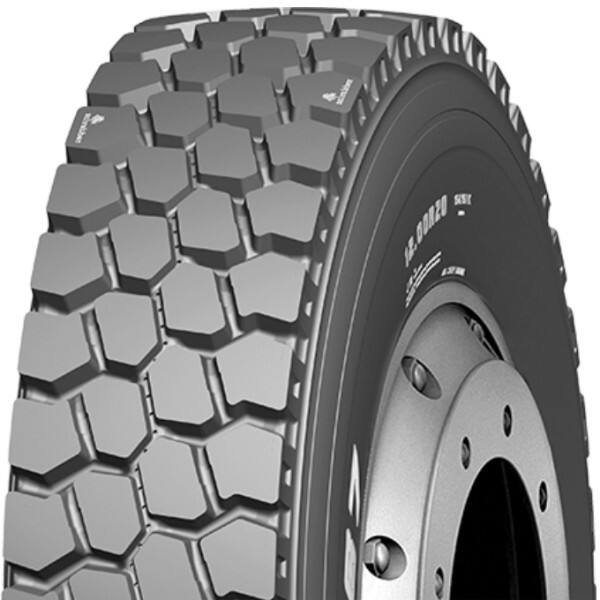
Radial Tire Construction: The Engineering Foundation of Lower Rolling Resistance
Radial tires achieve measurable fuel efficiency gains through fundamental engineering innovations in their internal structure. Unlike traditional designs, their construction minimizes energy wasted as heat during operation—directly translating to reduced fuel consumption.
Steel-belted radial design: How independent tread and sidewall flex reduce energy dissipation
Radial tires feature parallel steel cords running perpendicular to the tread direction, capped by a rigid steel belt package—typically specified in standards such as ISO 4000-1 and SAE J1269. This architecture creates two functionally independent zones:
- The tread remains dimensionally stable for optimal road contact
- The sidewalls flex freely during rotation
When the tread stays separated from the rest, it keeps its shape even when loaded down, while the sidewalls take care of bumps and rough spots on the ground. This kind of independent movement cuts down on energy loss during deformation much more effectively than those old style bias-ply tires we used to see everywhere. Tire manufacturers often layer different materials together for better performance too. Think about combining stiff steel belts with softer rubber mixtures. These layers work together to soak up pressure changes inside the tire, which stops the internal friction that turns useful motion into wasted heat instead.
Bias-ply comparison: Crisscross cord layers and inherent hysteresis losses
Conventional bias-ply tires use overlapping nylon cord layers angled diagonally across the casing—a design standardized in ISO 4000-2. This crisscross pattern creates structural inefficiencies:
| Design Feature | Radial Tires | Bias-Ply Tires | Energy Impact |
|---|---|---|---|
| Cord Orientation | Perpendicular to tread | Diagonal crisscross layers | – Hysteresis losses |
| Tread Stability | Steel belt reinforcement | Flexible crown | – Deformation energy |
| Heat Generation | Low rolling resistance | High internal friction | – Fuel consumption |
| Flex Efficiency | Localized sidewall bending | Full casing distortion | – Energy dissipation |
The continuous casing distortion in bias-ply tires causes pronounced hysteresis—where energy absorbed during compression isn’t fully returned during rebound. This inefficiency forces engines to expend more fuel to maintain speed. Radial construction’s targeted flexibility eliminates this parasitic energy drain at its source.
Rolling Resistance Reduction: The Direct Path to 8–12% Fuel Efficiency with Radial Tires
EPA/SAE validation: 25–35% lower rolling resistance in radial tires — translating to measurable MPG gains
Tests conducted by both the EPA and SAE International show that radial tires have about 25 to 35 percent less rolling resistance compared to old style bias-ply tires, according to their SAE J1269 standards. Rolling resistance makes up roughly 30% of what eats into a big rig's fuel tank, so cutting that down actually translates to real world gains. Truckers can expect around 8 to 12% improvement in fuel efficiency when they switch to radial tires. Considering fuel alone takes up more than 30% of what fleets spend on operations each month, these kinds of savings really add up at the end of the day for company bottom lines.
Tread-to-shoulder geometry and optimized sidewall stiffness: Minimizing parasitic deformation loss
Radial tires achieve efficiency through precision engineering of key stress points. Their construction enables:
- Independent sidewall flex, reducing hysteresis losses without compromising load support
- Tread-to-shoulder transition zones engineered to resist deformation during contact-patch compression
- Optimal casing stiffness, maintaining structural integrity across loading cycles
| Deformation Factor | Radial Tire Solution | Energy Saving Impact |
|---|---|---|
| Tread Squirm | Steel belt reinforcement | 18–22% reduction |
| Sidewall Bending | Cord angle optimization | 15–20% reduction |
| Shoulder Distortion | Continuous radius geometry | 12–15% reduction |
By controlling deformation vectors, radial designs ensure more work translates into forward motion rather than heat—directly enabling the EPA-verified fuel efficiency gains.
Real-World Validation: Fleet Data Confirming Radial Tires’ Fuel Efficiency Advantage
U.S. DOT Class 8 tractor trial (2022): 10.3% average fuel economy improvement post-radial retrofit
A landmark 2022 U.S. Department of Transportation (DOT) study tracked 143 Class 8 tractors retrofitted with radial tires over 12 months, controlling for payload weight and route topography. Fleets recorded a 10.3% average improvement in fuel economy—aligning closely with laboratory-based SAE J1269 findings on rolling resistance reduction.
The steel belts in radial tires help reduce energy loss from tire deformation when trucks cruise on highways most of the time. These tires actually save fuel consistently, even when speeding up, because they create less heat buildup in the rubber. For example, a standard long haul truck driving around 120 thousand miles each year might save somewhere close to 1,200 gallons of diesel fuel. Plus, these tires tend to wear out more evenly across their surface. This even wear means longer service life overall, so fleets can keep running efficiently well past 300,000 miles before needing replacements. Many fleet managers have noticed this benefit over years of operation.
Long-Term Efficiency Multipliers: How Radial Tires Sustain Fuel Savings Beyond Initial MPG Gains
Uniform wear and stable rolling resistance over 300,000+ miles — preserving efficiency across lifespan
Radial tires keep saving fuel for much longer than other types because they just wear out better overall. Their steel belted design spreads the wear across the tire surface more evenly, so efficiency doesn't drop off as quickly. With this kind of wear pattern plus good sidewall flexibility, rolling resistance stays pretty much the same even after hundreds of thousands of miles on the road. Fleet operators have actually tested this stuff, and what they found is pretty impressive. At around halfway through their life, radial tires still perform at about 95% of their original efficiency levels while bias ply tires lose between 15 to 20% efficiency during the same period. When manufacturers combine strong casing materials with solid geometry, these tires consistently save anywhere from 8 to 12% in fuel costs throughout their whole lifespan. That makes radial tires not just a smart purchase but something that keeps paying dividends as time goes on.
FAQ
Why do radial tires offer more fuel efficiency than bias-ply tires?
Radial tires minimize energy loss due to independent flexing of sidewalls and tread, reducing rolling resistance and thus offering more fuel efficiency compared to the crisscross pattern of bias-ply tires which leads to structural inefficiencies.
How much fuel savings can be expected from switching to radial tires?
Truckers can expect around 8 to 12% improvement in fuel efficiency when switching to radial tires, as they deliver about 25–35% less rolling resistance than bias-ply tires.
What is the impact of radial tires on long-term fuel efficiency?
Radial tires maintain uniform wear and stable rolling resistance over their lifespan. Even after 300,000 miles, they preserve roughly 95% of their original efficiency, continuously saving 8 to 12% in fuel costs.
Table of Contents
- Radial Tire Construction: The Engineering Foundation of Lower Rolling Resistance
- Rolling Resistance Reduction: The Direct Path to 8–12% Fuel Efficiency with Radial Tires
- Real-World Validation: Fleet Data Confirming Radial Tires’ Fuel Efficiency Advantage
- Long-Term Efficiency Multipliers: How Radial Tires Sustain Fuel Savings Beyond Initial MPG Gains
- FAQ