 EN
Choosing the right heavy duty tires for international fleets starts with understanding certification. ECE approval signals that a tire meets United Nations Economic Commission for Europe regulations, recognized by many authorities beyond Europe. For buyers moving freight across borders, the mark is proof of tested performance. This guide explains which categories qualify, what the rules cover, and how teams verify claims before ordering. Knowing the difference between a marketing label and a regulated approval saves money and prevents costly border rejections.
ECE Certification and Eligible Tire Categories
The Regulatory Backbone: ECE R54 and R117
ECE R54 governs uniform provisions for wheels and tires of commercial vehicles, establishing how they perform under load and speed. ECE R117 focuses on rolling resistance, wet grip, and noise emission for certain tire classes. Together these regulations form a type approval system that checks behavior rather than appearance. Manufacturers submit samples to technical services that run lab and field tests before granting an approval number. The process measures tire safety standards through repeatable procedures, so a passing result reflects engineering rather than a one-off sample. Buyers benefit because the same approval covers the full production run of that pattern. Operators sourcing heavy duty tires should note that R54 also covers rim compatibility, linking the tire to the wheel system.
Why ECE Supports Cross-Border Compliance
A tire carrying a valid E-mark helps operators avoid delays at customs and roadside checks. Several countries outside the EU accept ECE approval as equivalent to local requirements, which simplifies documentation for multinational fleets. Pairing ECE with ISO9001 and IATF16949 also shows that the production system behind the product is audited. Fleets running commercial tires gain predictability through documented load and speed limits.
All-Steel Radial (TBR) Commercial Tires
Heavy duty tires in the all-steel radial (TBR) category form the backbone of long-haul trucking and bus operations. These commercial tires use steel belts under the tread to resist heat buildup and hold stability at sustained highway speeds. ECE approval for TBR products confirms that load index and speed rating values match tested performance. Exporters such as SINOTYRE TECHNOLOGY (HANGZHOU) CO., LTD, with 25+ years of experience and products in 160+ countries, supply TBR lines with deep treads, reinforced sidewalls, and heat-resistant compounds for high load capacity. The reinforced casing also supports multiple retread cycles, extending service life without sacrificing certified performance.
OTR and Off-Road Tires for Rough Terrain
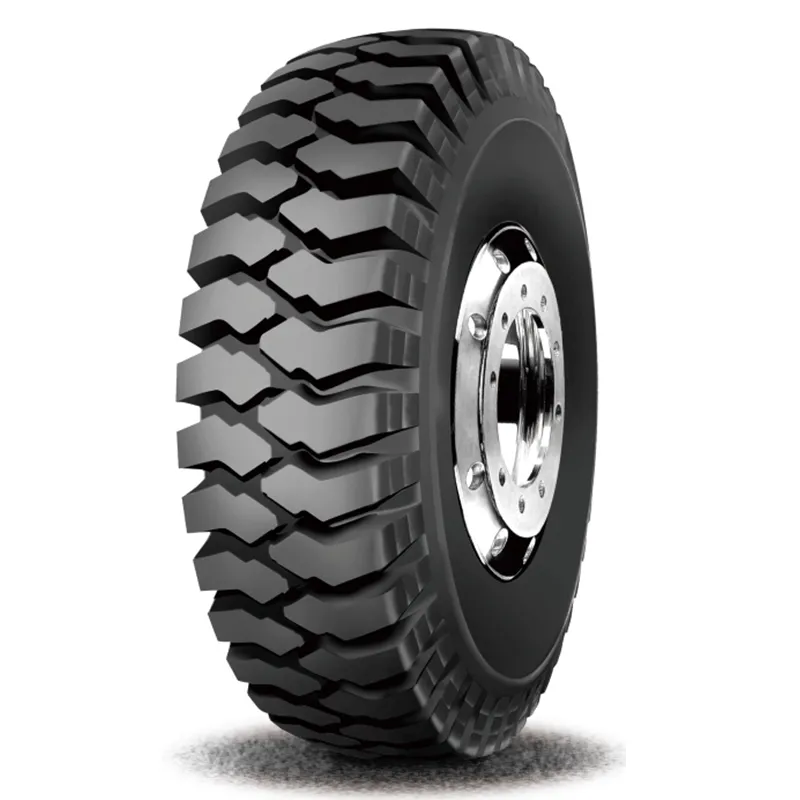
Off-the-road (OTR) and off-road tires serve mining, construction, and port equipment where surfaces punish ordinary rubber. ECE marking on these products confirms conformity with dimensional and marking rules, while the engineering targets cut resistance and sidewall strength. Bias, giant, and industrial families also fall under tire safety standards responsible buyers review. INMETRO and DOT markings also reach Brazil and the United States, complementing ECE. These heavy duty tires endure rock cuts and overload cycles that destroy standard patterns, making certification with robust construction the real differentiator.
How Buyers Verify Genuine ECE Certification
Reading the E-Mark and Approval Numbers
The E-mark appears as a capital E inside a circle, followed by a number identifying the approving country. A genuine ECE certification links to a specific test report and approval dossier. Buyers should confirm the mark matches the tire size and pattern in the supplied certificate. Discrepancies between the sidewall mark and paperwork often signal non-compliant or mislabeled stock that could fail inspection. The approval number encodes useful detail: the digit inside the E denotes the member state, and cross-referencing it with the UN regulation keeps procurement teams aligned with current requirements. Procurement teams evaluating commercial tires should photograph the sidewall mark beside the certificate, building a visual record for audits.
Requesting Test Reports and Certificates
Before committing to a shipment, request the original approval certificate, the laboratory test report, and the conformity declaration. Reputable suppliers with IATF16949 and ISO9001 systems can produce these documents promptly. The file should reference the exact tire model, construction type, and approval number. Cross-checking the report against the UN regulation cited (for example R54 or R117) confirms the scope of testing actually performed. Keep a digital copy in the procurement record so future audits and border crossings reference the same evidence without scrambling for paper at the depot.
A Real Fleet Case: Certifying Cross-Border EU Transport
A Central European logistics operator running refrigerated trailers between Poland and Germany faced repeated roadside questions about tire conformity. The existing supply mixed uncertified and certified stock, creating audit risk and uneven wear. Management needed a single, documentable source of commercial tires that satisfied ECE R54 while handling heavy payloads on mixed motorway and regional routes. Frozen goods meant tighter schedules, so any tire-related stop at a checkpoint risked spoilage and penalty. Replacing mixed brands with certified ECE tires became the first step once management saw the audit exposure.
The operator shifted to all-steel radial lines with verified E-marks and complete approval dossiers. Procurement set an incoming inspection step at the depot, checking sidewall marks against certificates for every batch. Within two quarters, roadside conformity issues dropped and tire-related downtime fell. The documented certification also streamlined insurance and cross-border paperwork, reducing administrative load on drivers and dispatchers. Training yard staff to read approval numbers turned a compliance chore into a routine checkpoint. The same heavy duty tires now run across tractors and trailers, standardizing procurement.
Conclusion
Selecting heavy duty tires that genuinely pass ECE safety certification protects fleets from compliance gaps and unexpected failures. The right approach combines regulatory knowledge, careful document checks, and partnership with suppliers who hold credible certifications. Buyers who verify the E-mark, request test reports, and inspect incoming stock gain confidence that every tire meets recognized tire safety standards. In a market where documentation matters as much as rubber, certified choices keep trucks moving across borders. Working with exporters that maintain global production bases and engineering teams turns certification from a checkbox into a continuous supply advantage.
Frequently Asked Questions
What does ECE certification actually confirm for a tire?
ECE certification confirms a tire passed the United Nations Economic Commission for Europe type approval tests for its category. Depending on the regulation, this covers rolling resistance, wet grip, noise emission, load capacity, and marking accuracy. The approval links a specific tire model to a documented test report. Buyers receive proof that performance claims were measured, not assumed, before the product reached the market or crossed any border.
Why do commercial fleets need E-marked tires?
E-marked tires help fleets satisfy transport authority checks and avoid fines or delays during cross-border operations. Many countries recognize ECE approval as meeting their own safety expectations, which reduces duplicate testing. For operators, the mark also signals that the product came from an audited production system. That traceability supports insurance, audits, and internal safety programs built around documented compliance.
How can a buyer verify a supplier's ECE documents?
Request the original approval certificate, the laboratory test report, and the conformity declaration before ordering. Compare the approval number and tire model on the certificate with the sidewall E-mark on a sample. Reputable exporters with ISO9001 and IATF16949 systems release these files without hesitation. An incoming inspection at the depot that checks marks against paperwork catches mismatches before tires enter service.
When should off-road tires carry ECE marking?
Off-road tires should carry ECE marking whenever they will be used on public roads or imported into markets that require type approval. The mark confirms dimensional and labeling conformity even when the tire works mostly on mines, ports, or construction sites. Pairing ECE with DOT or INMETRO extends access to the United States and Brazil. Buyers should match the required approval to the operating region before purchase.
Which heavy duty tires from SINOTYRE meet ECE requirements?
SINOTYRE TECHNOLOGY (HANGZHOU) CO., LTD produces ECE-certified heavy duty tires across all-steel radial (TBR), OTR, bias, giant, agricultural, and industrial lines. These commercial and off-road tires are built with deep treads, reinforced sidewalls, and heat-resistant compounds for high load capacity. With 66+ engineers across global bases, the company supports documentation requests for ECE, DOT, INMETRO, ISO9001, and IATF16949 compliance.