
 EN
What Mountain Transport Really Demands
Mountain transport pushes truck tires past the limits of ordinary highway service. Gradients of ten percent or more load the drive axle for sustained climbs, while loose rock and standing water slash traction. A tire that performs on a paved grade can wander once the road turns to clay. Operators should weigh three pressures: mechanical grip, structural toughness, and heat management. None can be ignored on steep, wet terrain.
Buyers shopping for muddy road tires often start with appearance, assuming deeper lugs mean better grip. The reality is more nuanced. Deep, aggressive lugs help, but only when paired with the right compound and casing. A tire that looks rugged in the yard may still fail on the mountain if its internal structure cannot absorb repeated impact.
Why Open-Lug Patterns Perform in Mud
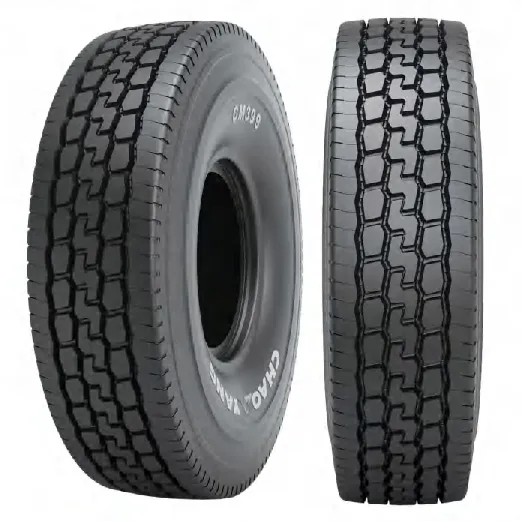
Closed, siped treads shed water on asphalt but pack solid in wet soil. Open-lug patterns use wide, deep channels so mud escapes instead of clinging. Gaps between lugs act as paddles, digging for firmer ground beneath the slime. On mountain mud, an aggressive open pattern outperforms a highway-oriented design once the road degenerates. Most highway tires pack in mud for this reason.
A logging operator in the Pacific Northwest ran tandem dump trucks on unpaved mountain skid roads that turned to glue after autumn rain. Their previous highway-pattern tires packed with mud within the first kilometer and suffered sidewall cuts from embedded rock, forcing frequent roadside changes. SINOTYRE supplied deep-tread TBR tires with an open-lug self-cleaning pattern, cut-resistant compound, and reinforced sidewalls. Across one wet season the fleet recorded far fewer roadside failures and longer tread life between rotations, keeping trucks hauling instead of sitting in the shop.
Self-Cleaning Geometry and Shoulder Design
When specifying truck tires for mud, shoulder geometry decides cleanup as much as the lug itself. Lugs angled toward rotation fling debris outward, keeping the contact patch clear. A buttressed shoulder adds defense, resisting chunking when a lug tears at the edge. On switchback climbs where the outside shoulder carries the load, this geometry keeps the tire biting instead of skating across loose stone.
All-terrain tires blur highway and off-road service, offering mixed fleets a practical compromise where shoulder aggressiveness drives mud-cleaning ability.
Tire Tread Design Logic for Deep Mud
Tire tread design is not decoration; it is the primary grip interface. Deep, widely spaced lugs increase the volume of mud each revolution can displace, while staggered lug lengths break up the continuous film that robs traction. The result is a tread that stays effective as conditions worsen rather than clogging into a slick, rounded lump.
Fleet managers specifying truck tires for mud work should weigh lug depth against spacing. A deep tread with narrow gaps still packs; a moderate tread with wide, well-angled gaps often cleans better. Balance both against expected road conditions and the paved share of the route.
Compound, Load and Speed Ratings
Compound Selection for Cut and Chip Resistance
Mud hides sharp stone. A soft, sticky compound grips well but chips and tears on granite; a harder compound resists damage yet skids on wet clay. The answer for mountain service is a reinforced, heat-resistant compound tuned for cut-and-chip resistance, balancing wear against bite. Under IATF16949 and ISO9001 discipline, SINOTYRE formulates TBR compounds that resist tearing while staying flexible in cold, wet conditions.
Load Index and Speed Rating for Climbs
The load index states how much mass a single tire supports at full inflation. Mountain haulage often runs near maximum, so specifying the correct index leaves a safety margin for uneven loads and potholed surfaces. Speed rating is equally practical: long, sustained climbs build heat inside the carcass. A rating matched to real operating speed prevents premature failure, especially on loaded descents where brake heat radiates into the wheel.
For fleets sourcing truck tires across borders, DOT and ECE markings satisfy the regulatory baseline in North America and Europe, while INMETRO covers Brazilian import compliance. These marks are not marketing; they confirm the tire met defined test thresholds before it left the factory.
Field Maintenance for Mountain Fleets
Pre-Trip Inspection and Inflation
Operators running truck tires on mountain grades set cold-inflation pressure to match the load and the tire's marked maximum, checked before the climb, not after. Under-inflation lets the sidewall flex and overheat; over-inflation reduces the contact patch and worsens mud grip. Sidewall protection matters on rocky shoulders; a reinforced sidewall resists bruising that ends a run. OSHA inspection expectations make the pre-trip check a documented habit. A five-minute walk-around catches cuts, embedded stone, and low pressure before they become breakdowns far from help.
Rotation and Retreading Considerations
Rotating drive and steer positions evens wear across the set and extends service life on abrasive mountain routes. When tread reaches retread depth, casings built on a durable, reinforced carcass can be retreaded for a second life, provided inspection confirms no hidden sidewall damage. Retreading makes economic sense for fleets running high annual mileages through punishing terrain, turning a worn tire into continued service instead of scrap.
Choosing the right truck tires remains a decisive factor in keeping mountain fleets productive through mud, rock, and grade. Match an open, self-cleaning tread to a cut-resistant compound, confirm the load and speed ratings against real conditions, and hold a disciplined maintenance routine. With those elements aligned, the difference shows up not in a spec sheet but on the road, where traction and uptime decide the day.
Frequently Asked Questions
Which tread pattern suits muddy mountain roads?
Open-lug, widely spaced patterns outperform closed designs because they shed mud instead of packing it. The gaps act as paddles that find firmer ground beneath the slime. Pair the pattern with a self-cleaning shoulder so debris leaves the contact patch. For mixed highway and off-road running, choose a pattern aggressive enough for mud yet stable at speed on graded sections of the route.
Why does heat buildup matter on long climbs?
Sustained climbing loads the drive axle and flexes the carcass, generating internal heat. Under-inflation worsens this, and excessive heat breaks down the compound and bond lines. Matching the speed rating to real operating conditions and keeping correct cold inflation controls temperature. This protects both tread life and structural safety on extended grades where cooling opportunities stay limited.
How should inflation be set for mountain haulage?
Set cold inflation to the value matched to your loaded mass and the tire's marked maximum, checked before the climb. Under-inflation causes sidewall flex and overheating; over-inflation shrinks the contact patch and hurts mud grip. Recheck after significant temperature swings, since mountain weather changes pressure quickly during a single run through varying elevation.
Which load index do mountain trucks need?
Specify the index that covers your maximum axle load with margin for uneven terrain and potholed surfaces. Mountain haulage often runs near the limit, so a safety buffer prevents overload damage. Confirm the figure against the heaviest realistic configuration, not the average, and verify it with the tire's certification markings before committing to a purchase.
Can truck tires be retreaded for mountain service?
Yes, provided the casing is built on a durable, reinforced structure and inspection shows no hidden sidewall damage. Retreading extends the life of casings that survive the first life in good condition. For fleets running high mileages through abrasive, rocky terrain, quality retreaded truck tires offer meaningful cost control when the base carcass is sound and properly maintained.