
 EN
EN
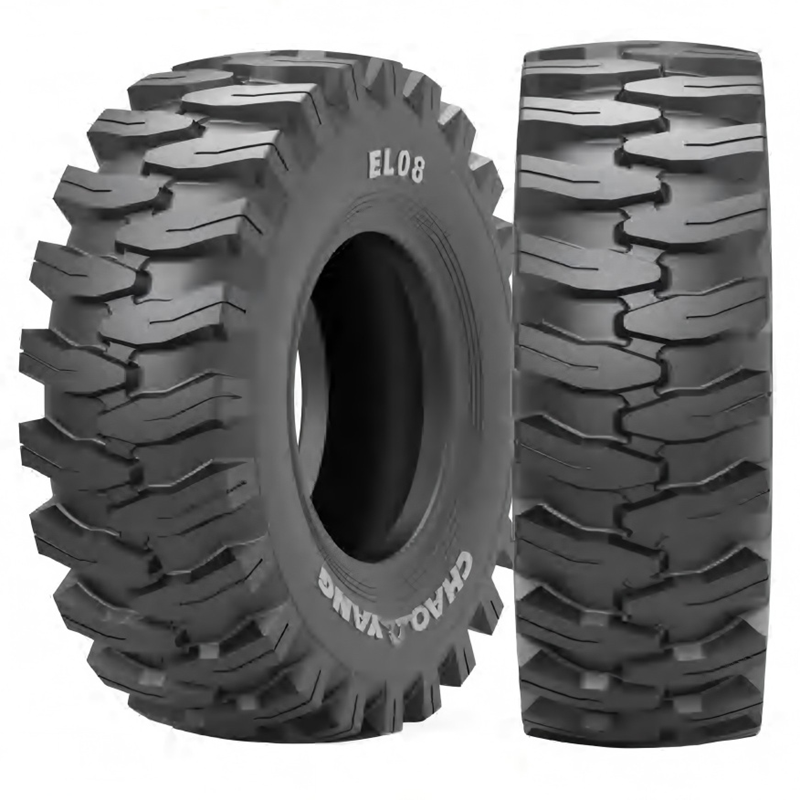
Core Construction and Performance Principles of Heavy Duty Tires
Radial vs. Bias vs. Solid OTR: Structural Trade-offs for Load, Heat, and Terrain
Radial tires use steel belts oriented perpendicular to the tread, reducing operational heat buildup by 15–20% and improving fuel efficiency on hard-surface haul roads. Bias-ply tires feature overlapping nylon plies that enhance puncture resistance in rocky, abrasive environments like quarries—but generate more heat under sustained load. Solid OTR (Off-The-Road) tires eliminate air pressure entirely, making them indispensable for ultra-high-load, high-impact applications such as mining shovels and demolition equipment where sharp debris would rapidly compromise pneumatic integrity. Each construction reflects a deliberate trade-off: radials prioritize heat management and rolling resistance; bias-plys emphasize toughness in mixed, unpredictable terrain; solids deliver uncompromising durability where mobility trumps ride quality.
Critical Design Features: Reinforced Sidewalls, Cut-Resistant Compounds, and Optimized Void Ratios
Heavy duty tires integrate multiple engineered features to withstand severe service demands. Sidewalls reinforced with embedded steel cords reduce puncture incidence by 34% in scrap-handling operations. Advanced tread compounds—blended with silica and aramid fibers—resist tearing from rebar, shale edges, and other sharp contaminants while retaining flexibility down to –40°F. Tread void ratio—the proportion of grooves to rubber—is precisely calibrated for function: 35–40% voids prevent clay balling without sacrificing stability, while higher ratios (45–55%) optimize self-cleaning in mud or sand. Heat-dissipating tread geometries extend service life by 23% in high-temperature environments like steel mills, where surface temperatures regularly exceed 140°F.
Environmental Matching: Selecting Heavy Duty Tires for Mud, Heat, Sand, and Corrosive Conditions
Tread Geometry and Compound Engineering for Extreme-Terrain Traction and Durability
Tire performance in extreme conditions hinges on purpose-built tread geometry and compound formulation. In muddy terrain, deep, widely spaced lugs (30–40% wider than standard) maximize debris ejection while preserving ground contact. For sand, paddle-style tread blocks increase surface area by 15–20%, distributing ground pressure to prevent sinking. Rock-heavy sites require tear-resistant compounds proven to withstand puncture forces up to twice those of conventional tires. Void ratios are tuned accordingly: 45–55% supports aggressive self-cleaning across variable soils without compromising structural rigidity.
Seasonal and Chemical Resilience: Heat Resistance, Winter Grip, and Corrosion-Proof Bead Systems
Modern heavy duty tires incorporate material science advances to endure seasonal and chemical extremes. Heat-resistant polymers retain elasticity at surface temperatures above 60°C, preventing premature tread cracking in desert or industrial settings. Winter variants use micro-siped tread patterns and low-temperature rubber formulations that maintain grip and flexibility at –40°C—boosting ice traction by up to 35%. Bead systems now feature polymer-coated steel cores and sealed interfaces designed to resist corrosion from road salts, de-icing chemicals, and coastal exposure. Temperature-adaptive compounds have been shown to extend lifecycle by 25% in regions experiencing rapid seasonal transitions.
Application-Specific Selection: Mining, Forestry, and Severe-Service Construction Requirements
Load Index, Rim Diameter, and Ground Pressure Calculations for Off-Road Stability
Selecting the right heavy duty tire requires precise alignment of three interdependent parameters: load index, rim diameter, and ground pressure. The load index must exceed peak operational weight by 15–20%—especially critical in mining, where sudden payload shifts and uneven terrain impose erratic stress. Rim diameter directly affects stability and impact resistance: larger rims (≥25") improve balance and sidewall protection for forestry equipment navigating steep, debris-laden slopes. Ground pressure determines flotation and terrain compatibility:
- Mining: Low-pressure designs (≤20 PSI) prevent rutting and sinkage in loose overburden
- Forestry: Reinforced treads operate effectively at 25–30 PSI, balancing puncture resistance with terrain conformity
- Construction: Variable-pressure capability allows adaptation across gravel, clay, and compacted subbase
Undersizing any parameter increases rollover risk and accelerates wear—particularly when operating on grades exceeding 30° or handling corrosive materials like wet concrete slurry or acidic tailings.
Alternative Solutions: When Foam-Filled, Solid, or Rubber Track Tires Outperform Standard Heavy Duty Tires
Standard pneumatic tires reach their limits in environments defined by extreme puncture risk, insufficient flotation, or maintenance constraints. Foam-filled tires inject closed-cell polyurethane into the casing—eliminating flats while preserving partial shock absorption, making them ideal for construction sites littered with nails, rebar, and broken concrete. Solid rubber tires offer maximum impact resistance in mining, port handling, and recycling facilities but sacrifice ride quality and traction on hard surfaces. Rubber track systems distribute weight over a broader footprint, delivering unmatched flotation in swamps, deep snow, or saturated sand—where traditional tires would bog down.
| Solution | Best For | Key Advantage | Trade-off |
|---|---|---|---|
| Foam-filled tires | Puncture-prone environments | Zero flats, reduced downtime | Heavier, moderate ride quality |
| Solid rubber tires | High-impact industrial settings | Maximum durability, no maintenance | Harsh vibration, limited traction |
| Rubber track systems | Soft terrains (swamps, sand, snow) | Superior ground pressure distribution | Higher cost, complex installation |
When evaluating alternatives, match solution strengths to core operational pain points: foam-filling extends tire life by 40% in scrap handling, while solid tires cut replacement frequency by 60% in rock quarries. Tracks reduce ground pressure to under 5 PSI—far below the 20–35 PSI typical of even the largest pneumatic tires—making them essential for sensitive or unstable terrain. A cost-per-hour analysis typically justifies the premium for foam or solid options in high-damage settings, whereas tracks deliver ROI in logging, wetland restoration, or other terrain-sensitive applications.
FAQ
What are the main structural differences between radial, bias, and solid OTR tires?
Radial tires have steel belts oriented perpendicular to the tread for reduced heat and improved fuel efficiency, bias-ply tires have overlapping nylon plies for puncture resistance in rocky environments, and solid OTR tires eliminate air pressure, making them suitable for high-load, high-impact applications.
How do heavy duty tires handle extreme terrain and climate conditions?
Heavy duty tires use purpose-built tread geometry and advanced compound formulations to maximize traction and durability in mud, sand, heat, and cold. They incorporate heat-resistant polymers, micro-siped patterns, and corrosion-proof bead systems to withstand diverse environmental challenges.
When should foam-filled or solid rubber tires be considered?
Foam-filled or solid rubber tires are ideal for environments with high puncture risks, such as construction sites with debris or industrial settings that demand maximum impact resistance. These options eliminate flats and reduce wear, offering better durability and less maintenance.
What are the benefits of using rubber track systems?
Rubber track systems provide superior flotation by distributing weight over a wider area, making them excellent for soft terrains like swamps, snow, or saturated sand. They are essential for terrain-sensitive operations requiring reduced ground pressure.
Table of Contents
- Core Construction and Performance Principles of Heavy Duty Tires
- Environmental Matching: Selecting Heavy Duty Tires for Mud, Heat, Sand, and Corrosive Conditions
- Application-Specific Selection: Mining, Forestry, and Severe-Service Construction Requirements
- Alternative Solutions: When Foam-Filled, Solid, or Rubber Track Tires Outperform Standard Heavy Duty Tires
- FAQ