
 EN
EN
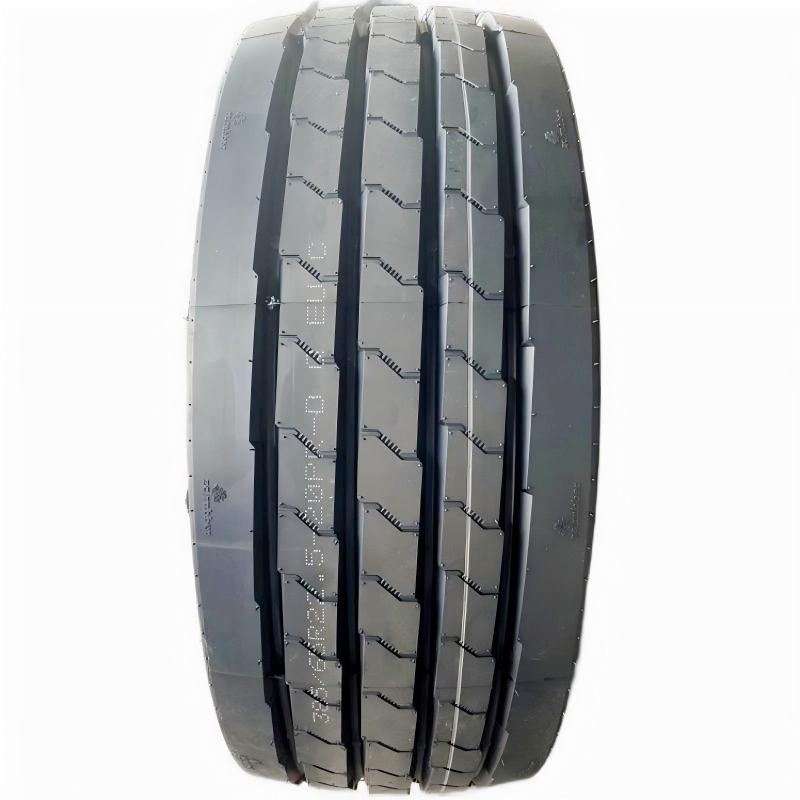
Understanding Trailer Tire Load Ratings and Weight Capacity
Matching Load Index to Trailer GVWR and Axle Weight Distribution
The Gross Vehicle Weight Rating (GVWR) defines your trailer’s maximum safe total weight, while the Gross Axle Weight Rating (GAWR) sets per-axle limits—both are foundational for tire selection. Each tire’s load index (a numerical code on the sidewall) must support at least the GAWR divided across the number of tires on that axle. For example, a dual-axle trailer with a 7,000-lb GAWR requires four tires each rated for no less than 1,750 lbs. Uneven weight distribution—such as 60% front / 40% rear—means higher-rated tires are needed on the heavier axle to prevent overloading. Critically, under-inflation severely erodes capacity: tires rated for 3,200 lbs at 65 PSI lose up to 35% of that rating when inflated to just 35 PSI, dropping to ~2,200 lbs. This underscores why cold inflation pressure and load index must be matched precisely.
Calculating Per-Tire Capacity Using Summation Rules and Safety Margins
Total combined tire capacity should exceed GVWR by at least 20% to accommodate dynamic loads, uneven terrain, and minor miscalculations. Use this three-step process:
- Step 1: Sum the individual load limits of all tires (e.g., four tires rated at 2,000 lbs = 8,000 lbs total).
- Step 2: Confirm the total exceeds 120% of GVWR (e.g., a 6,000-lb GVWR requires ≥7,200 lbs total tire capacity).
- Step 3: Ensure each tire’s individual rating covers the maximum possible load it may carry—including worst-case weight transfer during braking or cornering.
| Calculation Factor | Example Value | Requirement |
|---|---|---|
| GVWR | 10,000 lbs | Baseline |
| Total Tire Capacity | 12,000 lbs | ≥120% GVWR |
| Per-Tire Minimum | 3,000 lbs | ≥GAWR ÷ axle tire count |
Never operate above 90% of a tire’s maximum load rating. Overloading accelerates tread wear by up to 300% and increases heat-related failure risk by 50%, according to NHTSA’s 2023 analysis of trailer tire failures.
Load Range and Construction: Why Load Range E and F Are Essential for Heavy-Duty Trailer Tires
Decoding Load Range Letters (B–G) and Their Real-World Load/Pressure Equivalents
Trailer tires use standardized load range letters (B through G), each corresponding to a specific maximum load capacity at a defined inflation pressure. Load Range E tires support up to 2,500 lbs per tire at 80 psi; Load Range F handles 3,750 lbs at 95 psi—making them essential for trailers exceeding 7,500 lbs GVWR. As load range increases, so does required inflation pressure and structural reinforcement. Moving from Load Range C (1,820 lbs at 50 psi) to E nearly doubles capacity—and critically, raises the thermal safety margin. Highway travel alone can elevate internal tire pressure by 5–6 psi due to heat buildup, meaning lower ranges lack the reserve capacity to absorb these fluctuations safely. Industry data shows E and F tires reduce blowout incidence by 38% compared to lower ranges when hauling heavy, high-inertia loads like construction equipment or marine vessels.
Reinforced Sidewalls, Heat Dissipation, and Endurance Engineering in Load Range E/F Trailer Tires
Load Range E and F trailer tires integrate purpose-built engineering to sustain heavy loads without degradation:
- 10-ply equivalent construction with nylon cord overlays for enhanced tensile strength
- Thermal-resistant rubber compounds that dissipate heat 25% faster than standard formulations
- Triple-layer sidewalls designed to resist curb strikes, road debris, and lateral flex
- High-tensile steel belts that maintain dimensional stability under sustained load and high-speed operation
This architecture prevents sidewall buckling during aggressive maneuvers and stabilizes tread temperature—even in summer highway conditions. Stress testing confirms E/F tires reliably endure 200+ miles of continuous heavy-load transport without structural compromise—validating their necessity for commercial applications involving industrial machinery or multi-vehicle hauls.
ST vs. LT Trailer Tires: Structural Design, Compliance, and Application Limits
FMVSS No. 110 Requirements and Why ST Tires Are Legally Required for Most Non-Commercial and Commercial Trailers
Federal Motor Vehicle Safety Standard (FMVSS) No. 110 mandates strict performance criteria for trailer tires, including load stability, heat resistance, and resistance to sway. ST (Special Trailer) tires meet these requirements through stiffer sidewalls, thicker polyester-and-steel cord plies, and tread patterns optimized for straight-line tracking—not steering responsiveness. In contrast, LT (Light Truck) tires prioritize ride comfort and handling, making them structurally unsuited for the constant, unsteered loads trailers impose. Using LT tires on trailers violates FMVSS No. 110 and increases blowout risk by 30% during extended towing, per NHTSA’s 2023 findings. ST tires’ design inherently resists lateral flex and heat buildup, directly supporting legal compliance and operational safety. For virtually all non-commercial and commercial trailers with GVWR over 3,000 lbs, ST tires are not just recommended—they’re legally required.
Trailer Tire Sizing, Rim Compatibility, and Inflation Best Practices
Interpreting ST Tire Size Codes (e.g., ST235/85R16) and Selecting Correct Rim Width/Diameter
ST tire size codes follow a precise format: “ST235/85R16” denotes a trailer-specific radial tire with a 235 mm section width, an 85% aspect ratio (meaning sidewall height is 85% of width), and a 16-inch rim diameter. Proper rim compatibility is non-negotiable—using incorrect rim width risks bead separation, loss of air pressure, or catastrophic sidewall collapse under load. The Tire and Rim Association (TRA) publishes exact rim width recommendations for each ST size; for instance, ST235-series tires require a 7.5-inch rim width to ensure optimal sidewall stability during cornering, braking, and weight shifts. Always consult TRA guidelines—not vehicle manuals or generic charts—when verifying rim-tire pairings.
Cold Inflation Pressure Guidelines and the Critical Link Between Proper Inflation and Load Capacity
Cold inflation pressure—measured before driving or after the tires have sat for at least three hours—is the only reliable baseline for load capacity calculations. Underinflation reduces effective load capacity by up to 30% and generates excessive heat, accelerating internal fatigue and tread separation. Overinflation sacrifices traction, promotes center-wear, and increases susceptibility to impact damage. Ambient temperature changes significantly affect pressure: for every 10°F drop, pressure falls 1–2 PSI—so monthly checks are essential, especially before long trips. Crucially, never compensate for added load by reducing inflation; instead, select tires with higher load ratings. A 10% pressure deficit alone can cut tire service life in half.
Frequently Asked Questions
Why is load index important when selecting trailer tires?
The load index indicates how much weight a tire can safely support. It ensures that the tires can handle the trailer's axle weight distribution and prevent premature failures.
What is the minimum tire rating for a trailer with a GVWR of 6,000 lbs?
The total combined tire capacity should be at least 20% more than the GVWR. For a 6,000-lb GVWR, tires must collectively support at least 7,200 lbs.
Why are Load Range E and F tires recommended for heavy-duty trailers?
Load Range E and F tires offer higher load capacity and better heat dissipation, making them ideal for heavy loads and highway travel.
Can I use light truck (LT) tires on my trailer?
No, LT tires are not designed for trailer use and do not comply with FMVSS No. 110 standards for trailers. Using them increases the risk of blowouts.
How often should I check trailer tire inflation?
Tire inflation should be checked at least monthly or before long trips. Cold inflation pressure is the most accurate indicator.
Table of Contents
- Understanding Trailer Tire Load Ratings and Weight Capacity
- Load Range and Construction: Why Load Range E and F Are Essential for Heavy-Duty Trailer Tires
- ST vs. LT Trailer Tires: Structural Design, Compliance, and Application Limits
- Trailer Tire Sizing, Rim Compatibility, and Inflation Best Practices
- Frequently Asked Questions