
 EN
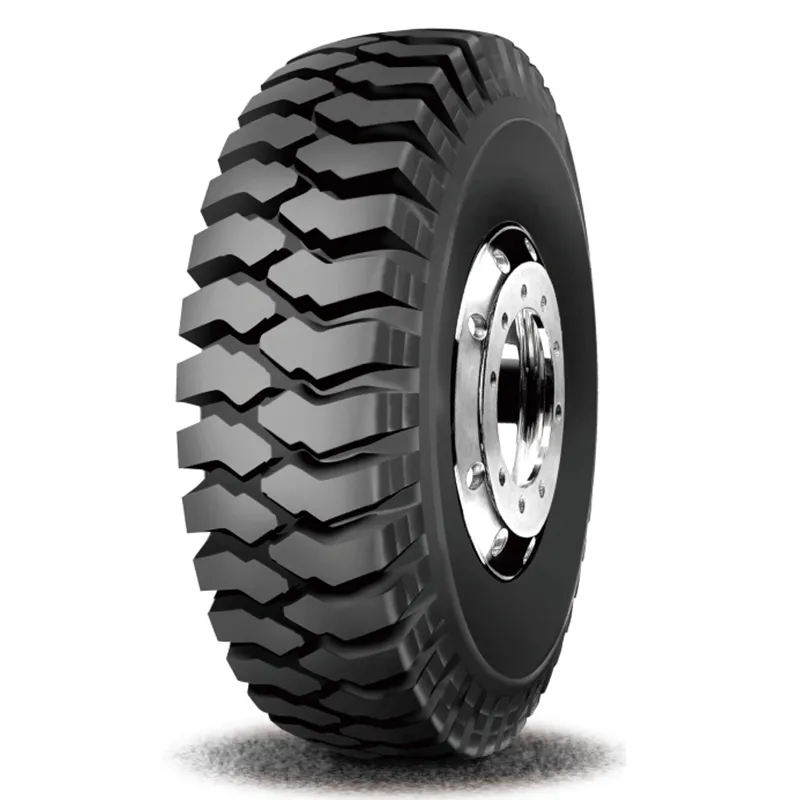
Core OTR Tire Certifications Required for Global Market Access
Exporting OTR (off-the-road) tires requires a region-specific compliance strategy—no single global certificate covers every destination market. The most widely recognized baseline standard is UNECE Regulation No. 54 (R54), which establishes type-approval requirements for pneumatic tires fitted to commercial vehicles and trailers, including many off-highway designs. In North America, the DOT symbol under FMVSS No. 139 serves as the primary product mark for highway-legal tires; Gulf Cooperation Council (GCC) member states require GCC certification; Brazil enforces INMETRO approval; and China applies CCC requirements to certain tire categories.
Product marks alone are insufficient. Many buyers also expect ISO 9001 or IATF 16949 certification—not as direct tire approvals, but as evidence of a stable, auditable quality management system. These process standards support consistent production, traceability, and repeatable testing for mining, construction, and port equipment tires operating under severe load and speed conditions.
Exporters must verify sidewall marking format, homologation documents, and any national testing differences before shipment. Because regional authorities interpret load, speed, or durability requirements differently, the same tire design may need additional evidence in different markets. A layered compliance review reduces customs delays, prevents rejected shipments, and protects long-term market access. For OTR tire suppliers, mandatory certification is not a one-time administrative step—it is the foundation of credible global distribution.
UNECE R54: The Foundational OTR Tire Type Approval Standard
UNECE Regulation No. 54 remains the most widely recognized type-approval framework for OTR tires used on commercial vehicles in export markets that follow the 1958 Agreement. It establishes uniform approval, production conformity, and marking rules so that one certificate can support market access across more than 60 contracting parties (UNECE, 2023).
Scope and Applicability to Off-Highway Tires
R54 applies to pneumatic OTR tires fitted to commercial vehicles and trailers where load index and speed category fall within defined ranges. It covers on/off-highway haulage, construction, and mining tires that may travel on public roads between job sites. Agricultural tires remain under R106, while passenger car tires fall under R30. With over 60 contracting parties to the 1958 Agreement, a single R54 approval significantly reduces retesting burdens for exporters targeting multiple markets.
Testing Requirements: Load, Speed, Durability, and Marking Compliance
An R54 approval requires verified performance across several areas:
- Load/speed test: the tire must withstand its rated load at the declared speed without failure.
- Endurance test: the tire runs under controlled inflation, load, and speed conditions for a defined duration.
- Dimension check: section width and overall diameter must remain within R54 tolerances.
Every certified tire must carry an E-mark, approval number, size designation, load index/speed symbol, and production date code. For OTR exporters, missing or unreadable R54 markings are a leading cause of border rejection.
Key Regional Adaptations of OTR Tire Certification
North America: FMVSS No. 139 Interpretation and DOT Marking for OTR Use
In North America, FMVSS No. 139 does not fully cover OTR tires—its scope is limited to passenger car, light truck, and some medium-duty tires intended for highway use. Most OTR tires used exclusively off-road are exempt, though manufacturers often apply the DOT symbol as a self-certification of conformance with applicable safety standards. Exporters must confirm whether their OTR tire falls under highway-use rules or qualifies for off-highway exemptions. The DOT symbol requires the manufacturer’s plant code and size designation, but formal test requirements may be limited for non-highway types. Some U.S. buyers still request FMVSS No. 139 test reports for mixed-use tires—especially those that transit public roads regularly.
EU & EEA: UNECE R54 Implementation and CE Marking Integration
The EU and EEA require UNECE R54 type approval for OTR tires intended for road use. CE marking does not apply to tires under EU product safety directives; instead, the e/E mark from R54 is the legally recognized market access symbol. Exporters should not confuse CE marking with UNECE type approval. For purely off-highway OTR tires, national rules may differ—but many buyers still expect R54 documentation to ensure liability protection and streamline customs clearance. Affixing the correct approval number and speed/load symbols is essential for regulatory acceptance.
Asia-Pacific: JIS D 4219 (Japan) and KS M 6701 (Korea) vs. R54 Recognition
Japan and Korea maintain domestic OTR tire standards that overlap with R54: JIS D 4219 covers dimensions, load capacity, and performance requirements for mining and construction tires, while Korea’s KS M 6701 specifies similar product and labeling expectations. Both regulators may accept UNECE R54 test data to reduce duplicate testing—but formal recognition varies by product category and application. Exporters should verify whether the importer requires the national mark, the R54 approval, or both. Aligning technical files with JIS or KS and R54 simplifies entry and strengthens audit readiness.
Practical Compliance Roadmap for OTR Tire Exporters
A clear certification roadmap helps OTR tire exporters avoid redundant testing, border delays, and compliance gaps. The sequence below separates pre-certification preparation from post-certification maintenance—but both phases must work together. Without a controlled process, a valid certificate can become useless after a minor design change or missed surveillance audit. Most border rejections for OTR tires trace back to missing documentation or unrecognized test reports.
Pre-Certification Steps: Technical Documentation and Test Lab Selection
Start by building a technical file for every tire size, ply rating, and tread pattern. Include design drawings, material declarations, and rated load-speed combinations. Choose an ISO/IEC 17025-accredited laboratory with experience in OTR tire type approval—and verify that its reports are accepted under UNECE R54 or the destination country’s equivalent standard before shipping test samples. Submit production-representative samples only after the documentation is audited, signed, and locked.
Post-Certification Maintenance: Surveillance, Recertification, and Labeling Updates
After approval, monitor production through factory surveillance audits and process checks. Schedule recertification before the certificate expires—or whenever you change a tread compound, mold, or raw material supplier. Update sidewall markings immediately for revised load index, speed symbol, or territory-specific codes. Keep all test reports, audit findings, and labeling revisions in one centralized compliance log. This record helps OTR tire exporters demonstrate ongoing conformity during customs inspections or market surveillance actions.
FAQ: OTR Tire Certifications
What is the UNECE R54 certification?
UNECE Regulation No. 54 is the foundational type-approval standard for pneumatic tires fitted to commercial vehicles and trailers. It ensures compliance in areas like load, speed, durability, and marking.
Do I need ISO 9001 or IATF 16949 for OTR tire exports?
While these are not direct tire certification standards, ISO 9001 or IATF 16949 demonstrate a quality management system that supports reliable production and traceability.
What is the difference between UNECE R54 and regional standards like FMVSS No. 139?
UNECE R54 is a global type-approval framework, while FMVSS No. 139 is specific to the U.S. and has limited scope. Other regions may have unique standards but often recognize R54 certification.
How can I avoid border delays for OTR tires?
Ensure proper documentation, sidewall markings, and compliance with national testing requirements. A layered review of homologation documents is critical for market access.
What is the importance of surveillance audits post-certification?
Surveillance audits ensure ongoing conformity with approved standards. Without timely audits, certifications can become invalid if production changes.