
 EN
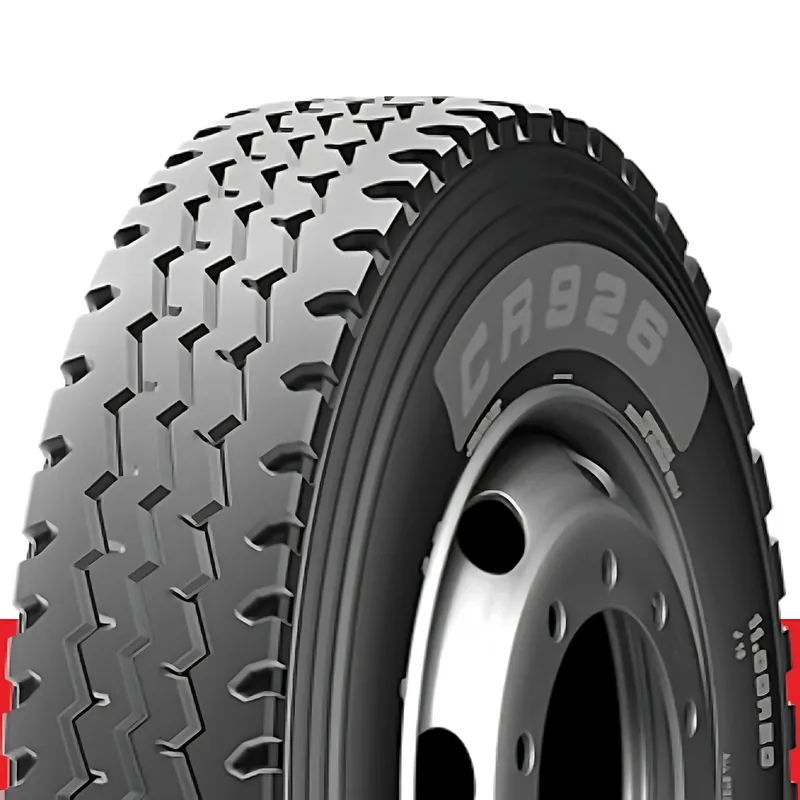
Why Rolling Resistance in Trailer Tires Drives Fuel Costs
The physics of rolling resistance and its outsized impact on trailer axles
Rolling resistance is the force opposing a tire’s motion as it deforms at the contact patch and recovers—energy lost primarily as heat during flexing. This hysteresis accounts for 85% to 90% of a tire’s total rolling resistance (Continental Tire). For trailer tires, this loss is especially consequential: trailers are unpowered, so every increment of resistance must be overcome by the tractor’s engine, directly consuming fuel. In heavy-duty operations, rolling resistance contributes 30% to 33% of total fuel cost—roughly $0.13 per mile (NACFE, 2023). Trailer axles often carry tandem loads exceeding 34,000 pounds, amplifying deformation and hysteresis. Higher inflation pressures and frequent misalignment further elevate resistance. Because the trailer contributes no propulsion, its tires act as constant mechanical drag—making their rolling resistance an outsized lever in overall fuel economy. A 10% reduction in trailer axle rolling resistance typically improves fleet-wide fuel efficiency by 1% to 2%. The principle is straightforward: less energy wasted in tire flex means more power delivered to moving the load. For fleet managers, optimizing this dynamic is among the most actionable paths to reducing fuel spend.
Trailer tires account for up to 35% of total vehicle rolling resistance — and ~60% of all tires in a dry van fleet
In a typical tractor-trailer combination, trailer tires contribute up to 35% of total vehicle rolling resistance—even though they’re not driven. This disproportionate share stems from quantity and usage: a dry van trailer carries 8 tires, while the tractor carries 10, meaning trailer tires represent about 60% of all tires in the fleet. With so many contact points, inefficiencies multiply across the vehicle. Underinflated trailer tires—a common maintenance gap—can increase rolling resistance by 10% or more, directly inflating fuel consumption. Trailer tires are also replaced less frequently than steer or drive tires, leading to older, harder compounds that often exhibit higher rolling resistance. Uneven load distribution—especially heavier loading on the rear trailer axle—further magnifies resistance. Since fuel is the largest variable cost for most fleets, reducing trailer tire rolling resistance delivers direct, measurable savings. Prioritizing trailer tire selection and maintenance captures fuel efficiency gains that are otherwise routinely overlooked.
Fuel Savings and ROI of Low Rolling Resistance Trailer Tires
Validated fuel efficiency gains: 0.5–1.2% reduction per 10,000 miles (EPA & NACFE)
Low rolling resistance (LRR) trailer tires reduce the energy wasted as heat during each rotation. EPA SmartWay (2023) and NACFE (2022) data confirm that properly specified LRR tires on trailer axles cut fuel consumption by 0.5% to 1.2% per 10,000 miles. Though modest in percentage, this translates into meaningful annual savings: for a dry van fleet averaging 100,000 miles per tractor annually, a 1% reduction conserves over 100 gallons of diesel per trailer—depending on baseline fuel economy. These gains scale across multi-trailer operations, making LRR trailer tires one of the most accessible levers for lowering fuel spend. Critically, modern LRR designs achieve these improvements without compromising load capacity, thanks to advanced compounds and tread architectures engineered for structural integrity under heavy freight loads.
Total cost-per-mile improvement: Fuel savings + extended tread life (+8–12%) + fewer heat-related failures
The financial case for LRR trailer tires extends well beyond fuel savings. Real-world fleet data shows advanced tread compounds and optimized belt packages extend tread life by 8% to 12% versus conventional trailer tires—reducing replacement frequency and related labor costs. Lower rolling resistance also reduces internal heat buildup, which directly lowers the incidence of heat-related failures like tread separations and blowouts. Fewer roadside events mean lower emergency repair costs and fewer delivery delays. When combined, fuel savings, longer service life, and reduced maintenance expenses lower total cost per mile by 2–3 cents in typical long-haul operations. This holistic value transforms LRR trailer tires from a fuel-only investment into a durable, risk-mitigating asset—one that supports both economic and operational resilience.
Balancing Performance: Wet Traction, Durability, and Compliance in Modern Trailer Tires
The pursuit of fuel savings through low rolling resistance (LRR) trailer tires has historically raised concerns about compromised wet traction and accelerated wear. Today, those trade-offs are largely resolved. Modern LRR trailer tires integrate silica-enhanced tread compounds, precision-engineered sipe patterns, and reinforced sidewall constructions that sustain wet-road grip while minimizing energy loss. NACFE’s testing confirms that the latest generation delivers up to a 1.2% fuel efficiency gain without sacrificing the 100,000-mile tread life expected from traditional designs. This durability is supported by robust carcass construction that resists heat-induced deformation under sustained heavy loads—ensuring consistent performance across long hauls.
Safety compliance remains foundational. The National Highway Traffic Safety Administration (NHTSA) sets minimum tread depth and inflation requirements for trailer tires, and federal regulations mandate proper load distribution to prevent sway and instability. Selecting LRR tires with appropriate load ratings—and pairing them with disciplined maintenance—enables fleets to realize fuel savings while meeting regulatory standards. Strategic tire management—including routine inflation checks and alignment verification—ensures LRR benefits aren’t eroded by premature wear or avoidable safety violations.
Strategic Deployment: Selecting and Maintaining Low Rolling Resistance Trailer Tires for Maximum ROI
A strategic shift to low rolling resistance (LRR) technology is not a component swap—it’s a calculated deployment. True ROI emerges only when tire selection and ongoing care are treated as a unified, continuous process. This discipline ensures theoretical fuel savings translate into real-world performance, elevating tires from a consumable expense to a long-term operational asset.
Matching LRR trailer tires to axle position, load profile, and route conditions
Trailer axles serve a distinct mechanical function: bearing vertical load and enduring lateral scrubbing—not transmitting torque. That makes them the safest and most effective position for LRR tires, where reduced energy loss doesn’t compromise traction. Yet effectiveness hinges on application fit. A 2023 fleet analysis found mismatched tires can erode up to 15% of potential service life. The critical step is aligning tread compound, casing design, and tread pattern with the specific load profile and dominant route condition. A tire optimized for high-speed, steady-state interstates will underperform on regional routes with frequent stops and tight turns—where sidewall durability and scrub resistance become decisive. Matching design intent to operational reality prevents premature wear and ensures LRR benefits are fully realized—not offset by shortened life.
Critical maintenance practices: Inflation consistency, alignment, and rotation protocols
An LRR tire is a precision system—and inflation pressure is its most sensitive performance variable. The flexible sidewalls and advanced compounds that minimize energy loss are highly responsive to underinflation, which increases rolling resistance by over 3% and accelerates heat-driven wear. For every 10 psi below specification, fuel consumption rises by approximately 1%, directly neutralizing the tire’s efficiency advantage. Equally vital is trailer axle alignment: even minor misalignment forces tires to scrub laterally, creating persistent drag that can raise fuel use by up to 2.5% and cause irregular, premature wear. Finally, a structured rotation protocol equalizes wear across wheel ends. When implemented consistently, rotation extends overall tread life by 8–12% (SmartWay, 2023) and reduces unscheduled downtime—completing the triad of practices that unlocks maximum ROI from LRR trailer tires.
FAQ
What is rolling resistance in trailer tires?
Rolling resistance refers to the force that opposes tire motion due to deformation at the contact patch and energy lost as heat during flexing. It affects fuel consumption since unpowered trailer tires act as a constant mechanical drag.
Why are trailer tires so impactful to fuel efficiency?
Trailer tires often make up 35% of total vehicle rolling resistance and about 60% of tires in a dry van fleet. Due to their unpowered nature, inefficiencies like underinflation or uneven loading directly affect overall fuel consumption.
What are low rolling resistance (LRR) trailer tires?
LRR tires are designed with advanced compounds and tread architectures that minimize energy loss and reduce rolling resistance. They improve fleet fuel efficiency without compromising load capacity, durability, or safety compliance.
How can underinflation affect LRR trailer tires?
Underinflation raises rolling resistance by over 3%, increases fuel consumption, and accelerates heat-driven wear. Proper inflation is critical to ensuring performance benefits.
What maintenance practices optimize LRR tire performance?
Best practices include consistent inflation checks, trailer axle alignment, and regular tire rotation to equalize wear and maximize tread life.
Table of Contents
- Why Rolling Resistance in Trailer Tires Drives Fuel Costs
- Fuel Savings and ROI of Low Rolling Resistance Trailer Tires
- Balancing Performance: Wet Traction, Durability, and Compliance in Modern Trailer Tires
- Strategic Deployment: Selecting and Maintaining Low Rolling Resistance Trailer Tires for Maximum ROI
- FAQ